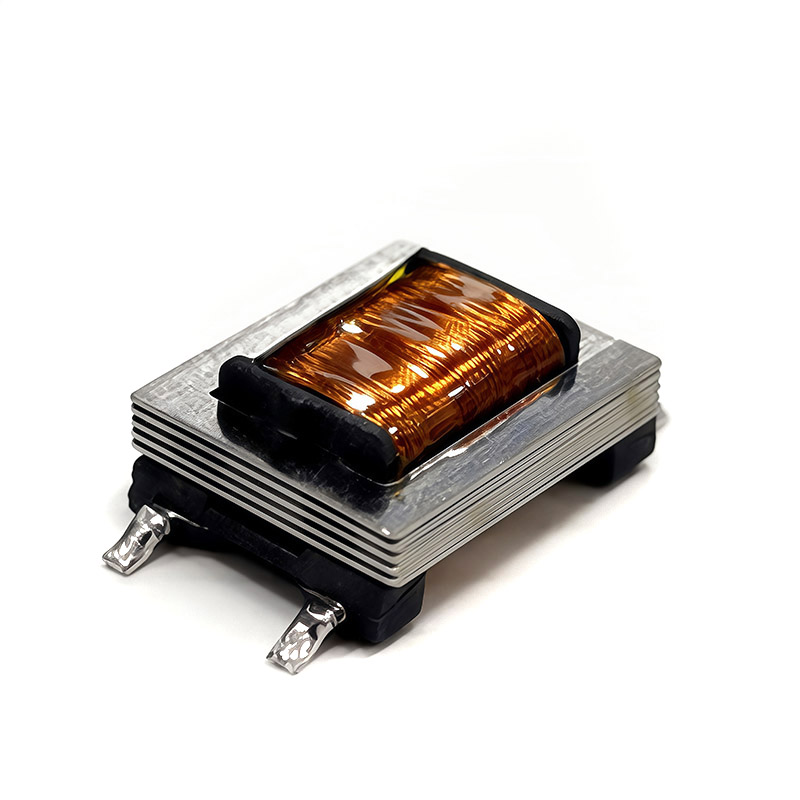
In the fields of high-end audio, precision instruments, and weak-signal measurement, Permalloy transformers are almost universally recognized as the "performance ceiling." Why do they stand out in applications that are extremely sensitive to distortion and noise? This article starts from material properties and explains the principles, advantages, and typical applications of Permalloy transformers, along with selection recommendations.
1. What Is Permalloy
Permalloy is a class of soft magnetic alloys based primarily on iron-nickel (Fe-Ni), with nickel content typically ranging from 30% to 80%, and small amounts of molybdenum, copper, and other elements added to optimize magnetic performance. After specific heat treatment, Permalloy can achieve extremely high initial permeability and very low coercivity, making it a typical "high-permeability, low-loss" soft magnetic material.
Compared with common silicon steel sheets and ferrite, the most notable feature of Permalloy is its ability to achieve very high permeability under weak magnetic fields. This means it can operate efficiently with extremely small excitation signals, making it ideal for processing weak audio and measurement signals.
2. Core Advantages: High Permeability, Low Distortion, Wide Frequency Response
Permalloy transformers are used in precision applications due to the following three key advantages:
- Extremely High Permeability: Fewer turns are required to achieve the desired inductance, reducing size and copper loss while enhancing weak-signal coupling capability.
- Low Hysteresis Distortion: With extremely low coercivity and a narrow hysteresis loop, harmonic distortion remains very low even across a wide dynamic range, delivering pure sound reproduction.
- Wide Frequency Response: Maintains a flat response across the entire audio band (20Hz–20kHz) and even beyond, with minimal phase distortion.
| Comparison Aspect | Permalloy | Standard Silicon Steel | Ferrite |
|---|---|---|---|
| Initial Permeability | Extremely high (up to tens of thousands) | Moderate | High |
| Coercivity / Distortion | Extremely low | Relatively high | Moderate |
| Suitable Frequency Range | Audio and wideband weak signals | Primarily power frequency | Primarily high frequency |
| Cost | High | Low | Medium |
| Typical Applications | Precision audio, instrumentation, sensors | Power transformers | Switching power supplies |
3. Typical Application Scenarios
With its exceptional weak-signal processing capability, Permalloy transformers are widely used in the following areas:
High-Fidelity Audio: In microphone preamplifiers, dynamic/ribbon microphones, professional mixing consoles, and audiophile-grade audio equipment, Permalloy audio transformers are used for impedance matching and signal coupling, preserving maximum detail while minimizing distortion. For related options, refer to the audio transformer series and microphone transformer series.
Precision Instruments and Measurement: In weak-signal amplification, sensor interfaces, medical electronics, and metrology equipment, Permalloy transformers are used for isolation and signal conversion, where their low noise and low drift characteristics ensure measurement accuracy.
Isolation and Balanced Conversion: In audio and communication links requiring electrical isolation or balanced/unbalanced conversion (Balun), Permalloy devices provide high isolation and excellent common-mode rejection.
4. Selection and Usage Considerations
Although Permalloy offers outstanding performance, it is also relatively delicate and requires special attention during selection and use:
- Magnetic Shielding: Permalloy is sensitive to mechanical stress and external magnetic fields, so a shielding cover is typically required. Avoid compression and vibration during installation that could degrade magnetic performance.
- DC Bias Protection: DC components can quickly drive the core toward saturation. Proper AC coupling must be ensured in the circuit to prevent DC from flowing into the windings.
- Cost Trade-off: The material cost is high, so Permalloy should be used in critical positions with stringent requirements for distortion and noise, rather than in general power applications.
- Heat Treatment Process: The magnetic performance of the finished product is highly dependent on the annealing heat treatment process. The supplier's process capability directly determines the final performance.
Shenzhen Zhi Xiang Yuan Electronics Co., Ltd. has accumulated mature processes in the winding, annealing, and shielding packaging of Permalloy transformers, offering customized solutions with low distortion and wide frequency response for audio and instrumentation customers, while ensuring batch-to-batch consistency.
FAQ
Q1: What is the difference between a Permalloy transformer and an ordinary audio transformer?
The main difference lies in the core material. Permalloy has significantly higher initial permeability and lower coercivity than ordinary silicon steel or alternative materials, resulting in lower distortion, better weak-signal coupling, and wider frequency response. However, the cost is also higher, making it more suitable for high-end audio and precision applications.
Q2: Why are Permalloy transformers sensitive to vibration and DC?
Mechanical stress alters the magnetic domain structure and reduces permeability, so compression and vibration must be avoided and a shielding cover should be used. DC components shift the core operating point and quickly bring it toward saturation, causing a sharp increase in distortion. Therefore, DC blocking is essential in the circuit.
Q3: When is it worthwhile to choose a Permalloy transformer?
When the application has extremely high requirements for distortion, noise, and weak-signal processing—such as audiophile audio, microphone preamps, precision measurement, and medical electronics—the performance improvement offered by Permalloy justifies its cost. For ordinary power supplies or general audio coupling, conventional materials are sufficient.
Recommended Reading